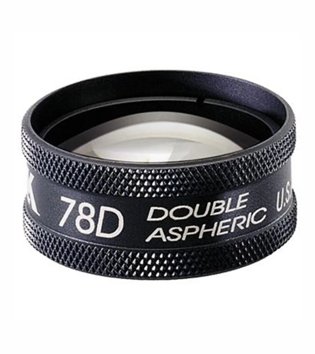
An Aspheric Lens is an optical lens whose surface profiles are not sections of a sphere or cylinder, but are instead mathematically defined to achieve superior optical performance compared to traditional spherical lenses. While a spherical lens has a constant radius of curvature, an aspheric lens has a radius of curvature that continuously changes from the center to the edge. This design modification is engineered specifically to eliminate spherical aberration, a common optical defect where light rays passing through the edges of a spherical lens focus at a different point than those passing through the center. By removing this defect, a single aspheric lens can often replace a complex multi element lens system, resulting in lighter, smaller, and sharper optical instruments like high end cameras, microscopes, and laser systems.
Spherical Aberration Correction: The key feature is the ability to completely eliminate spherical aberration, leading to a much sharper and clearer image across the entire field of view.
System Simplification: Often allows for the replacement of two or more conventional spherical lenses with a single aspheric lens, significantly reducing the weight and complexity of an optical assembly.
High Numerical Aperture: Can be designed with a higher numerical aperture than spherical lenses, allowing them to gather more light and perform better in low light conditions.
Precision Manufacturing: Requires highly precise manufacturing techniques such as diamond turning or precision molding to achieve the exact non spherical surface profile necessary for optimum performance.
Wide Application Range: Essential in modern optical technology, including compact digital cameras, CD and DVD players, ophthalmic devices, and high power laser focusing systems.
Lens Type: Non spherical surface profile lens.
Material: Available in optical glass, polymer, or infrared transmitting materials.
Optical Property: Designed primarily for aberration correction (specifically spherical aberration).
Diameter Range: Varies widely, from small millimeter sizes for sensors up to large diameters for laboratory telescopes.
Coating: Often includes an Anti Reflection (AR) coating to maximize light transmission and minimize surface reflections.